
Common repairs, $150–$600
Elements, thermostats, thermocouples, relief valves: the parts that actually fail, fixed in a single visit. Most no-hot-water calls land here.
No hot water is a today problem, so we treat it like one. Gas, electric, continuous-flow and heat-pump systems repaired same-day across Kellyville, and when a system is genuinely done, you get the honest replace-versus-repair numbers, not a sales pitch.
Here is the industry’s quiet incentive problem: a thermostat is a modest job and a new system is a four-figure one, so guess which gets recommended to people standing in cold water. Yet the actual failure list is boringly repairable, electric tanks lose elements and thermostats, gas units lose thermocouples and pilot assemblies, continuous-flow systems flash error codes that decode to a sensor or a flow fault. Metered, tested and swapped, most of these are same-day fixes at a fraction of replacement money.
Our rule in Kellyville is simple: the multimeter and manometer speak first. When the verdict is a part, you get the part. When a tank is genuinely at the end, cylinder weeping, second major failure, double-digit age: you get both numbers side by side and the reasoning in plain English. What you will never get is a replacement quote built on nothing but your cold shower and our convenience.
A storage tank holds a lot of water, and in a block it has neighbours underneath. A slow leak that would be a nuisance in a house is a damage claim in an apartment.
A freestanding house keeps every option open. energy.gov.au reports electric storage is used by around 50% of Australian households and is cheapest to buy but generally dearer to run, while a heat pump uses about 30% of the energy of a conventional electric system.
If yours sits in an internal cupboard, check that the safe tray beneath it drains somewhere and is not blocked with dust and lint. That tray is the only thing between a failed tank and the ceiling below, and it is almost never inspected.
Instantaneous units suit apartments well: no stored water to fail into the building, no cylinder taking up a cupboard, and no recovery time when several people shower in sequence.
The trade-off is that they need adequate gas supply and correct flue arrangements, which in an older block is not always straightforward. It is worth establishing what the building can actually accommodate before choosing a replacement.
In an apartment this is the first question, because it decides who arranges and pays for everything that follows. A unit inside your lot serving only your apartment is yours. A central plant serving the building, or a unit sitting on common property, is the owners corporation's.
Check your strata plan before you authorise work, not after. It is the difference between a bill you owe and one you can hand on.
A temperature and pressure relief valve is meant to release a small amount of water during a heating cycle. A continuous drip is not normal.
It usually means the valve is worn or the incoming pressure is too high, and both are inexpensive to correct. Left alone, a weeping valve wastes a surprising volume of heated water and eventually seizes, at which point it is no longer a safety device.
NSW and federal energy programs have at various times covered a substantial share of a heat pump upgrade, particularly when replacing electric storage. The schemes change, the eligibility rules change, and installers are not always current on either.
We will tell you what applies at the time you ask rather than quote a figure from last year. It is occasionally the difference between a repair and an upgrade making sense.
Two different faults look identical from the shower. Either the system has stopped heating, or it is heating and the hot is not reaching you.
Check another tap, ideally at the opposite end of the house. Hot everywhere else means a tap or mixer fault, not a heater fault. Nothing hot anywhere points at the unit, its power or gas supply, or the pipe leaving it: and that is worth knowing before anyone quotes on a replacement.
Indicatively: electric storage replaced like for like generally $1,300-$2,200; gas continuous flow $1,800-$3,000; heat pump $3,000-$5,000 before any rebate. Common repairs, element, thermostat, tempering or relief valve: usually sit between $250 and $600.
Those are market figures for 2026, not a quote from us. Your number is fixed before work starts, and rebates are worth asking about because they move.
Elements, thermostats, thermocouples, relief valves: the parts that actually fail, fixed in a single visit. Most no-hot-water calls land here.
Gas valves, control boards on continuous-flow units, and bigger jobs on systems still worth the spend.
Like-for-like replacement when the tank is done. Gas storage runs $1,200–$2,200 installed.
Endless hot water, no tank to rust, and it frees the space the cylinder occupied.
After rebates. Costs the least to run of the lot, worth the numbers conversation on any replacement, not just the green one.
Repair and replacement prices arrive together when the tank is marginal, you decide with both in hand. Figures here are indicative of the 2026 Sydney market rather than a quote from us, you get your own number as a fixed price before any work starts.

System type, age, and what it is doing: that is usually enough to bring the likely part on the van and tell you honestly whether today ends in hot water.
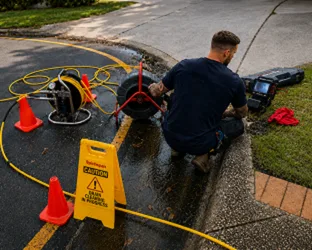
Elements get metered, thermostats tested, gas components checked in sequence. The diagnosis is what the meter says, not what sells best.
A repairable fault gets repaired on the spot. A dying tank gets you the repair price and the replacement price side by side, and the call stays yours.
If it is a replacement: delivered, installed to spec: tempering valve, relief drain, compliant connections: old unit carted away, hot water the same day in most cases.
Call before 10am and in most cases the water is hot again tonight. Describe the system and we bring the likely fix on the van.
Same-day repairs, straight replace-versus-repair numbers, and a fixed price before work starts.

Leave your details and our local Kellyville team will call you back fast.